2.6.14
Bleak Lighting
---
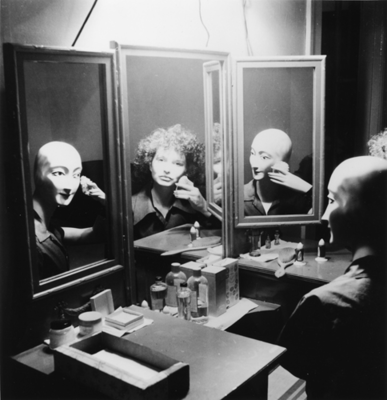
In David Bordwell's final post in his superb series detailing a few of the major American critical voices of the 40's, he mentions reviews by Agee and Farber of some of Maya Deren's films, and Deren's subsequent responses. The following are Deren's responses mentioned in the post...
---
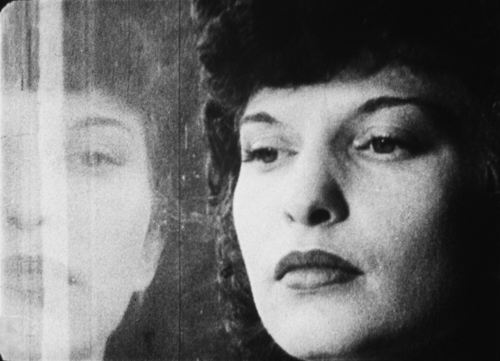
(via Anthology Archives)
-
From Film Culture No. 39 (Winter 1965)

-
From The Legend of Maya Deren...Pt Two, "Chambers" (1942-1947)

-
From The Legend of Maya Deren...Pt Two, "Chambers" (1942-1947)

-
---
UPDATE 6/01/2014:
If, while no doubt on your way to more worthwhile destinations, you happen to have somehow stumbled on to this site within the past good while, you were likely left with the impression that it had been abandoned. That impression, though understandable, is not entirely accurate...
During that time the majority of my focus was spent preparing and applying for archival graduate programs, whilst staving off the nervous breakdown always seemingly just around the corner. Alas, what little energy usually left was all but obliterated by the train wreck of a platform that is Blogger. Thankfully, that part of the process is coming to an end, and enthusiasm for this endeavor has been renewed. I was very fortunate to be able to consider several great programs, but in the end decided the Preservation and Presentation of the Moving Image program at the University of Amsterdam was the best fit for me...
Once I've gotten settled in (having lived my entire life in Salt Lake City I'm sure the cultural transition will be seamless), I'm hoping that I will be able to use some of the same methodologies and areas of focus and apply them to something a little more ambitious and expansive. If that sounds overly nebulous at the moment it's because I'm not quite sure what form it will take (except that it won't be on Blogger, dammit). Up to this point I've been fairly limited in what I could get my hands on, and as a result the focus has largely been on established, well documented (American) filmmakers. I hope the relocation will bring greater flexibility, which I would like to use to start exploring lesser documented artists from a much wider range of nationalities...
This site has been a great opportunity to come in to contact with many very passionate individuals that I likely would not have met otherwise, and for that I'm very grateful. I don't feel as though I've done a whole lot to contribute to this community in the way I would like, especially when it comes to newer artists working in younger formats, but by pursuing this path I hoping I can work towards something more substantial...
---
Subscribe to:
Posts (Atom)