23.12.12
Another Way of Looking at the Universe
---

(from ARK by Ronald Johnson)
---

(click image to read document)
---
---


(from A Child's Garden and the Serious Sea by Stan Brakhage)
---


3.12.12
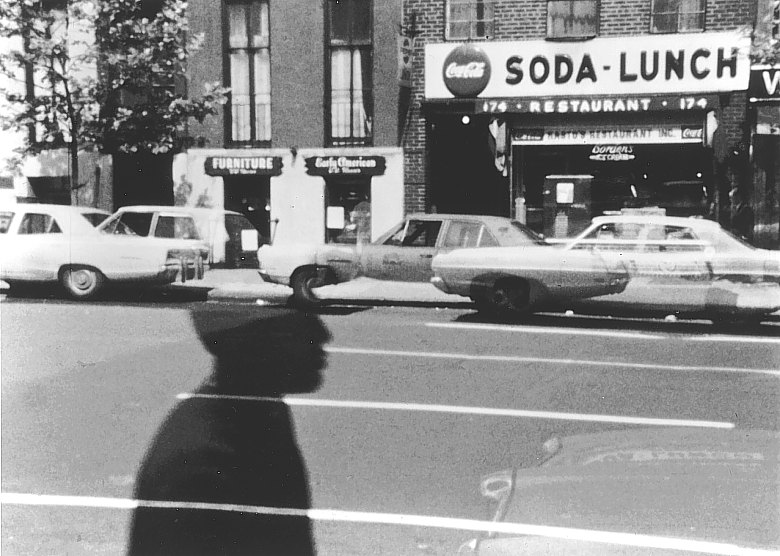
Ernie Gehr

GENERAL INTRODUCTION:
"For nearly forty years, Ernie Gehr has been making cinematic magic, often from the least likely materials. Indeed, Gehr’s most famous film, Serene Velocity (1970), in which the filmmaker transforms an institutional hallway in the basement of a classroom building at the State University of New York at Binghamton into a nexus of visual and conceptual energy, merely by adjusting his stationary camera’s zoom lens every four frames for twenty-three minutes, can be read as Gehr’s manifesto. For Gehr the most everyday spaces and the most mundane actions offer the imaginative filmmaker the most interesting potential. No other filmmaker, with the exception of Michael Snow, has so relentlessly and so productively explored the capacity of filmmaking to develop the visual (and auditory) opportunities afforded by the cinematic apparatus itself."
(Scott MacDonald in A Critical Cinema 5)
---
Morning (1968)
Wait (1968)
Reverberation (1969)
Transparency (1969)
History (1970)
Field (1970)
Serene Velocity (1970)
Still (1969-71)
Shift (1972-74)
Eureka (1974)
Behind the Scenes (1975)
Table (1976) .
Untitled (1977 (1977)
Untitled − Part One (1981)
Mirage (1981)
Signal − Germany on the Air (1985)
Rear Window (1986/91)
This Side of Paradise (1991)
Side/Walk/Shuttle (1991)
For Daniel (1992-96)
Cotton Candy (2001)
Glider (2001)
Crystal Palace (2002; revised and released as HD in 2011)
City (2002)
The Collector (2003)
Passage (2003) [16mm film]
Precarious Garden (2004) [16mm film]
The Collector (2004)
The Astronomer's Dream (2004)
Essex Street Market (2004)
Noon Time Activities (2004)
Workers Leaving the Factory (After Lumiere)
Greene Street (2004)
Before the Olympics (2006)
Shadow (2007)
10th Avenue (2007)
The Dutch Arrive in New York (2007)
Daily Commute (2007)
New York Lantern (2008)
Waterfront Follies (2008)
The Search for Mechanical Life (2008)
Abracadabra (2008)
Urban Sightseeing (2009)
Hurry Up Henrietta (2009)
19th Century Mechanical Magic Lantern Slides & Dissolving Views (2009)
Auto-Collider (2009)
Auto-Collider II (2009)
Auto-Collider III (2009)
Auto-Collider IV (2009)
Auto-Collider V (2009)
Auto-Collider VI (2009)
Thank you for Visiting (2010)
Mist (2010)
Auto-Collider VII (2010)
Auto-Collider VIII (2010)
Auto-Collider IX (2010)
Auto-Collider X (2010)
Auto-Collider XI (2010)
Auto-Collider XII (2010)
Chambers of Time (2010) [HD]
Super Realism (2010) [HD]
On The Boardwalk At Coney Island (2010) [HD]
Picture Taking:
[This is available for standard single channel *HD* projection,
in addition to being a 3-channel installation piece.]
Auto-Collider XIII (2011)
Auto-Collider XIV (2011)
Auto-Collider XV (2011)
Auto-Collider XVI (2011)
Auto-Collider XVII (2011)
Auto-Collider XVIII (2011)
Auto-Collider XIX (2011)
Work-in-Progress (2012)
Departure (2012) [HD]
Brooklyn Series I (2012)
Brooklyn Series II (2012)
Photographic Phantoms (2013)
Winter Morning (2013)
The Quiet Car (2013)
Auto-Collider XVIII (2013)
Brooklyn Series (2013)
INSTALLATIONS:
MoMA On Wheels (2001)
Navigation (2001)
Panoramas of the Moving Image:
19th Century Mechanical Magic Lantern Slides & Dissolving Views (2005) (5-channels)
Ocean Avenue (2005)(4-channels)
Crossing The Bowery (2006)(3-channels)
Water Series (2007-08) (approx. 50 single channel pieces)
Water Front (2008)(two 4-channel pieces)
Surveillance (2010) HD ((4-channels)
Picture Taking (2010) HD (available as either a single channel or a 3-channel work)
Wait (1968)
Reverberation (1969)
Transparency (1969)
History (1970)
Field (1970)
Serene Velocity (1970)
Still (1969-71)
Shift (1972-74)
Eureka (1974)
Behind the Scenes (1975)
Table (1976) .
Untitled (1977 (1977)
Untitled − Part One (1981)
Mirage (1981)
Signal − Germany on the Air (1985)
Rear Window (1986/91)
This Side of Paradise (1991)
Side/Walk/Shuttle (1991)
For Daniel (1992-96)
Cotton Candy (2001)
Glider (2001)
Crystal Palace (2002; revised and released as HD in 2011)
City (2002)
The Collector (2003)
Passage (2003) [16mm film]
Precarious Garden (2004) [16mm film]
The Collector (2004)
The Astronomer's Dream (2004)
Essex Street Market (2004)
Noon Time Activities (2004)
Workers Leaving the Factory (After Lumiere)
Greene Street (2004)
Before the Olympics (2006)
Shadow (2007)
10th Avenue (2007)
The Dutch Arrive in New York (2007)
Daily Commute (2007)
New York Lantern (2008)
Waterfront Follies (2008)
The Search for Mechanical Life (2008)
Abracadabra (2008)
Urban Sightseeing (2009)
Hurry Up Henrietta (2009)
19th Century Mechanical Magic Lantern Slides & Dissolving Views (2009)
Auto-Collider (2009)
Auto-Collider II (2009)
Auto-Collider III (2009)
Auto-Collider IV (2009)
Auto-Collider V (2009)
Auto-Collider VI (2009)
Thank you for Visiting (2010)
Mist (2010)
Auto-Collider VII (2010)
Auto-Collider VIII (2010)
Auto-Collider IX (2010)
Auto-Collider X (2010)
Auto-Collider XI (2010)
Auto-Collider XII (2010)
Chambers of Time (2010) [HD]
Super Realism (2010) [HD]
On The Boardwalk At Coney Island (2010) [HD]
Picture Taking:
[This is available for standard single channel *HD* projection,
in addition to being a 3-channel installation piece.]
Auto-Collider XIII (2011)
Auto-Collider XIV (2011)
Auto-Collider XV (2011)
Auto-Collider XVI (2011)
Auto-Collider XVII (2011)
Auto-Collider XVIII (2011)
Auto-Collider XIX (2011)
Work-in-Progress (2012)
Departure (2012) [HD]
Brooklyn Series I (2012)
Brooklyn Series II (2012)
Photographic Phantoms (2013)
Winter Morning (2013)
The Quiet Car (2013)
Auto-Collider XVIII (2013)
Brooklyn Series (2013)
INSTALLATIONS:
MoMA On Wheels (2001)
Navigation (2001)
Panoramas of the Moving Image:
19th Century Mechanical Magic Lantern Slides & Dissolving Views (2005) (5-channels)
Ocean Avenue (2005)(4-channels)
Crossing The Bowery (2006)(3-channels)
Water Series (2007-08) (approx. 50 single channel pieces)
Water Front (2008)(two 4-channel pieces)
Surveillance (2010) HD ((4-channels)
Picture Taking (2010) HD (available as either a single channel or a 3-channel work)
As If (2013)
---
“In Ernie Gehr’s films, light seems an absolute quality of the image. Light is in the image. This light is not merely the energy beamed from the projector, by which the film is seen; it is the energy streaming from Ernie Gehr’s lucid sensibility, by which virtue we see.”
(Hollis Frampton)
---
---
WRITINGS ON GEHR:
---
Assimilating Video by Federico Windhausen
Can We See Philosophy? A Dialogue w/ Ernie Gehr
candid camera
Ernie Gehr's Films Traffic in Images and Light
Ernie Gehr, In Two Parts
Ernie Gehr: Surveillance
Films Akin to Poetry...
Gehr in ‘Eyes Upside Down’ by P. Adams Sitney
Gehr in ‘A Line of Sight: American avant-garde film since 1965’ by Paul Arthur
Gehr in ‘A Line of Sight: American avant-garde film since 1965’ by Paul Arthur
Obsessed by Place, and Finding One on a Frontier
Profile (w/ various film descriptions) by Brain Frye
Profile (w/ various film descriptions) by Brain Frye
Tom Gunning on the films of Ernie Gehr
Two Nights with Ernie Gehr
Upside Down Cameras and Other Wonders
Two Nights with Ernie Gehr
Upside Down Cameras and Other Wonders
---
[NOTE: CLICK ON IMAGES TO READ DOCUMENT]
---
from Avant-Garde Film: Motion Studies by Scott MacDonald

--- [NOTE: CLICK ON IMAGES TO READ DOCUMENT]
---
from Avant-Garde Film: Motion Studies by Scott MacDonald
from The Garden in the Machine... by Scott MacDonald

---
from Film Quarterly 43

---
from Artforum IX

---
from Film Culture No. 63-64

---
from Film Culture no. 70-71

Some Notes on the Films of Ernie Gehr

---
Ernie Gehr: Walker in the City

---
A Flower Grows Out of the Mud

---
Perspective and Retrospective: The Films of Ernie Gehr

---
From "James Gibson, Psychologist, and Ernie Gehr, Filmmaker:
A Case of Conceptual Paralellism in Science and Art
A Case of Conceptual Paralellism in Science and Art

---
Film in Review

---
Philosophizing Through the Moving Image: The Case of 'Serene Velocity'

---
from Masterpieces of Modernist Cinema

---
from Millennium Film Journal No. 3

---
from Millennium Film Journal No. 12

---
from Millennium Film Journal 16/17/18

---
from Millennium Film Journal No. 34

---
Film in Review
---
Philosophizing Through the Moving Image: The Case of 'Serene Velocity'
---
from Masterpieces of Modernist Cinema
---
from Millennium Film Journal No. 3
---
from Millennium Film Journal No. 12
---
from Millennium Film Journal 16/17/18
---
from Millennium Film Journal No. 34
---
from Millennium Film Journal No. 39/40

---
from Shadows, Specters, Shards...

---
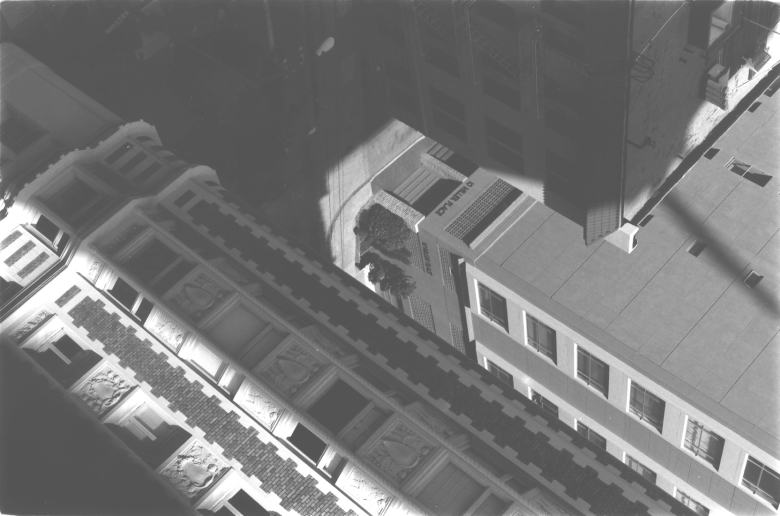
“Gehr is also the master of the converse stratagem: holding the camera still to intensify the movement within the frame. Rather than negating the dynamic of the moving perspective, such a concentration of attention, often accompanied by a retardation of movement, brings into focus the fundamental ground that gives the moving camera its charge”
(P. Adams Sitney)
---

---
GEHR ON FILM/VIDEO:
Ernie Gehr (inquire within for email address, also included in 'A Critical Cinema 5')
---
---
WRITINGS BY GEHR:
---
Notes on Recent Films


---
“Best known for his single-minded, dynamic minimalism, Ernie Gehr has also been the American avant-garde filmmaker most devoted to exploring the "intensification of nervous stimulation" that pioneer sociologist Georg Simmel identified with urban life. Gehr's oeuvre is a tale of three cities: San Francisco (his home for the last fifteen years), Berlin (which his parents fled before his birth in 1943), and New York (where he emerged as a leading structural filmmaker in the late '60s)."
(J. Hoberman)
---

---
Close Listening
Ernie Gehr: Film and Architecture
The Seventh Art Interview (video)
Sonic Acts Festival Interview
---
from A Critical Cinema 5 by Scott MacDonald

INTERVIEWS WITH GEHR:
Close Listening
Ernie Gehr: Film and Architecture
The Seventh Art Interview (video)
Sonic Acts Festival Interview
---
from A Critical Cinema 5 by Scott MacDonald
---
from Film Culture No. 53-55

---
from Film Culture No. 70-71

---

---
“I like to be able to step back in different ways, and acknowledge the limitations of the medium, pick up on certain aspects of so-called reality, of fragments of reality that I am paying attention to. Through the medium I try to articulate certain things that I sense are taking place, forces. Sometimes the movement of a camera will articulate something that the image itself might not.”
(Ernie Gehr)
---
(my thanks to Fred Camper for his assistance)
---
5.11.12
Nathaniel Dorsky & Jerome Hiler
---
-
---
---
GENERAL INTRODUCTION:
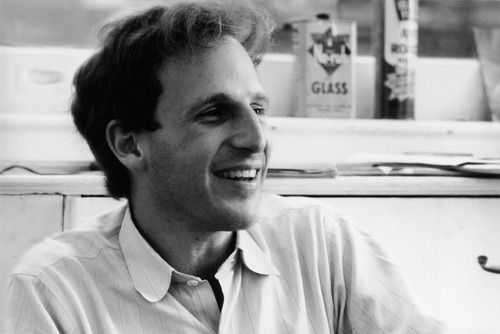
"Dorsky arrived on the New York scene with a trilogy of short films—Ingreen (1964), A Fall Trip Home (1964), and Summerwind (1965)—evocations of his childhood and adolescence in a New Jersey small town (Millburn). Most obviously in Ingreen, but to some extent in A Fall Trip Home, we see Dorsky coming to grips with the combined excitement and terror of gay desire, in a cinematic form that recalls the psychodramas of the 1940s and 1950s. Unlike the defiant early landmarks of what we now call Queer cinema—Kenneth Anger’s Fireworks (1947), Jean Genet’s Un chant d’amour (1952), Jack Smith’s Flaming Creatures (1963)—Dorsky’s early films reflect what must have been the more usual adolescent experience of confronting gay desire during the 1950s and 1960s: Dorsky seems to make his way through small-town adolescence with a guilty sense that he’s diªerent from his family and friends, and full of puzzlement about what to do about this.
By the time he made Summerwind, Dorsky had become fascinated with a new form of cinematic perception: an intense looking at the particulars of the physical world that, in the years that followed, would mature into a series of remarkable visual experiences: Hours for Jerome, Parts 1 and 2 (1982), Pneuma (1983), Alaya (1987), Triste (1996), Variations (1998), Arbor Vitae (2000), Love’s Refrain (2001), The Visitation (2002), and Threnody (2004). The visual sensibility of Dorsky’s mature films, all of which are silent (Dorsky asks that they be projected at eighteen frames per second, what he calls “sacred speed”), tends toward the spiritual, the meditative. Implicitly Dorsky asks that viewers consider the successive shots in his films not as parts of a strategy for delivering viewers to a narrative or ideological conclusion, but as an opportunity for becoming more fully aware of the particulars of each image and its interrelationships with the images that precede and follow it. Dorsky’s films are a form of visual/conceptual training in apprehending the world, and its representation in cinema, in a deeper, more reverent sense."
(Scott MacDonald in A Critical Cinema 5)
-
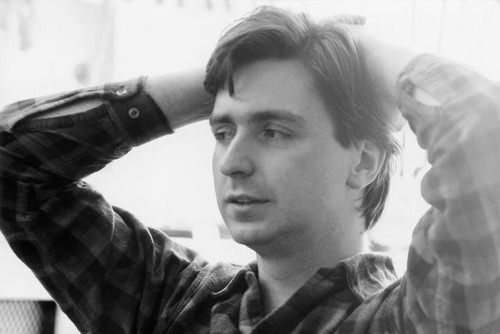
"Jerome Hiler might be called the phantom of the cinema. I have known
Jerry since about 1965, when I borrowed his Bolex to shoot a film of my
own at St. Theresa’s Church across the street from his apartment, and
even then, living on the lower East Side in a small flat, he had already
amassed many hours of gorgeous 16mm footage, all neatly edited into
related segments on large stacks of 400′ reels; I sat there, entranced,
for hours, watching his work, all of it silent, which knocked me out
then, and does still...
Lately, Jerome has been into stained glass rather than film, although he recently completed a feature film, Music Makes a City,
and he also teaches and lectures from time to time, but of course, I
wish he would hold a marathon screening of his work, just as it is —
pull out any ten or twelve 400′ reels, and run them for an unforgettable
evening." (Wheeler Winston Dixon)
---
FILMOGRAPHY:
[DORSKY]
[DORSKY]
Ingreen (1964)
A Fall Trip Home (1964)
Summerwind (1965)
Hours For Jerome Part 1&2 (1980-82)
Pneuma (1977-83)
Ariel (1983)
Alaya (1976-87)
17 Reasons Why (1985-87)
Triste (1974-96)
Variations (1992-98)
Arbor Vitae (1999-00
Love's Refrain (2000-01)
The Visitation (2002)
Threnody (2004)
Song and Solitude (2005-06)
Winter (2007)
Sarabande (2008)
Compline (2009)
Pastourelle (2010)
Aubade (2010)
The Return (2011)
August and After (2012)
April (2012)
Song (2013)
Spring (2013)
Summer (2013)
December (2014)
February (2014)
Avraham (2014)
-
[HILER]
Fool’s Spring (Two Personal Gifts) [co-made with Nathaniel Dorsky] (1966)
Library [co-made with Nathaniel Dorsky] (1970)
Gladly Given (1997)
Target Rock (2000)
Music Makes a City (2010)
Words of Mercury (2011)
In the Stone House (1967-70/2012)
New Shores (1979-90/2012)
Misplacement (2013)
---

---
Summerwind (1965)
Hours For Jerome Part 1&2 (1980-82)
Pneuma (1977-83)
Ariel (1983)
Alaya (1976-87)
17 Reasons Why (1985-87)
Triste (1974-96)
Variations (1992-98)
Arbor Vitae (1999-00
Love's Refrain (2000-01)
The Visitation (2002)
Threnody (2004)
Song and Solitude (2005-06)
Winter (2007)
Sarabande (2008)
Compline (2009)
Pastourelle (2010)
Aubade (2010)
The Return (2011)
August and After (2012)
April (2012)
Song (2013)
Spring (2013)
Summer (2013)
December (2014)
February (2014)
Avraham (2014)
-
[HILER]
Fool’s Spring (Two Personal Gifts) [co-made with Nathaniel Dorsky] (1966)
Library [co-made with Nathaniel Dorsky] (1970)
Gladly Given (1997)
Target Rock (2000)
Music Makes a City (2010)
Words of Mercury (2011)
In the Stone House (1967-70/2012)
New Shores (1979-90/2012)
Misplacement (2013)
---
WRITINGS ON DORSKY/HILER:
Reconstructing Nathaniel Dorsky
Review of 'Song and Spring'
Review of 'Music Makes a City'
Review of 'Music Makes a City'
Review of 'Music Makes a City'
Rites of Passage: San Francisco Bay Guardian
Review of 'Song and Spring'
Review of 'Music Makes a City'
Review of 'Music Makes a City'
Review of 'Music Makes a City'
Rites of Passage: San Francisco Bay Guardian
Scope review of 'Devotional Cinema'
'Song' and 'Spring' Recall 'Diamonds' of a Bygone Era
The Startingly Beautiful Films of Nathaniel Dorsky
Tone Poems by P. Adams Sitney
'Words of Mercury' Review
---
[NOTE: CLICK IMAGES TO READ DOCUMENTS]
---
from The Exploding Eye by Wheeler Winston Dixon


---
from Independent 27.5 (2004)

'Song' and 'Spring' Recall 'Diamonds' of a Bygone Era
The Startingly Beautiful Films of Nathaniel Dorsky
Tone Poems by P. Adams Sitney
'Words of Mercury' Review
---
[NOTE: CLICK IMAGES TO READ DOCUMENTS]
---
from The Exploding Eye by Wheeler Winston Dixon
from Independent 27.5 (2004)


---
from The Garden in the Machine by Scott MacDonald

---
excerpts from Radical Light...

---
from Millennium Film Journal No. 35/36

---
from Millennium Film Journal No. 38

---
from Cinema Scope 22

---
Margin Notes by Chuck Kleinhans

---
from Visionary Film by P. Adams Sitney

---

---
WRITINGS BY DORSKY:
Personal Photos:
---
from Cinematograph No. 1 (1985)

---
from Stan Brakhage: Correspondences

---
excerpt from Devotional Cinema

---
---
DORSKY ON FILM:
Collection at Berkeley University (search Dorsky's name)
INTERVIEWS WITH DORSKY/HILER:
Video Data Bank interview (inquire within)
---
from A Critical Cinema 5 by Scott MacDonald


---
from Cinematograph No. 1 (1985)

---
From Release Print 19 No. 10

---
From Cinema Scope 52

---
-

---
"I decided that what was most interesting to me about avant-garde film -- or at least the avant-garde films that I found most interesting -- was a search for a language which was purely a filmic language. Not something limited to film, but a purely filmic language that also had human value to it. There are various filmmakers who’ve explored human cinema language, or cinema human language, which is something other than using film to replicate a written language form, whether it be the novel or the poem. I was interested in something that was actually intrinsic to the nature of cinema, expressive as cinema, and at the same time expressive of our human needs and human worth.” (Nathaniel Dorsky)
-
---
(my thanks to Nathaniel Dorsky, Chris Gehman, Steve Polta, Chuck Kleinhans, Roger Bebee and Joel Wanek for their assistance)
---
"Definitely. I’m an occasional filmmaker, but with regret—because I love people, and when I meet people who say, 'We’d like to see more of your films'—basically telling me that I could make them happy by showing the films—I feel bad. There is a kind of joy that can come into someone’s life from seeing something beautiful, and the good-natured part of me sometimes wonders, 'Aren’t you being a little stingy?'” (Jerome Hiler)
---
(my thanks to Nathaniel Dorsky, Chris Gehman, Steve Polta, Chuck Kleinhans, Roger Bebee and Joel Wanek for their assistance)
---
Subscribe to:
Posts (Atom)